Powder coated metal offers something raw or naturally aged metals cannot: controlled color combined with a hard, consistent finish. It can turn shelving, furniture frames, partitions, railings, and small architectural details into deliberate parts of a room’s palette. The strongest powder coated metal ideas focus on useful components first, then select color and texture to reinforce the wider interior.
Start With Functional Metal Elements
Items that already need strength are natural candidates for powder coating. Stair balustrades, shelving systems, table bases, steel doors, cabinet frames, bench supports, and room dividers can gain both protection and a more tailored appearance.
Examples from architectural outdoor spaces can demonstrate how coated metal handles strong visual lines particularly well. Indoors, those same thin profiles help define zones without requiring bulky partitions.
Use Slim Profiles Where Possible
Metal’s strength can allow frames and supports to remain relatively narrow. Visually lighter structures often suit contemporary rooms better than oversized elements designed to imitate heavy timber.
Treat Color as Part of the Architecture
Black remains common, but powder coating gives designers a much wider range. Deep green, warm gray, cream, muted blue, clay-inspired tones, and even restrained burgundy can make metal feel integrated with cabinetry or walls.
Interior collections showing custom room details can help with studying how repeated colors connect separate features. A green metal shelf, for instance, might echo a nearby painted door without requiring both pieces to be made from the same material.
| Metal Element | Finish Direction | Design Benefit |
|---|---|---|
| Shelving | Matte neutral | Quiet structure |
| Stair railing | Dark satin | Defined lines |
| Table frame | Muted color | Controlled accent |
| Room divider | Soft black | Graphic contrast |
Use Texture to Control the Look
Powder coated finishes can appear smoother, more textured, flatter, or slightly more reflective depending on the specification. That difference affects both appearance and how easily marks are noticed.
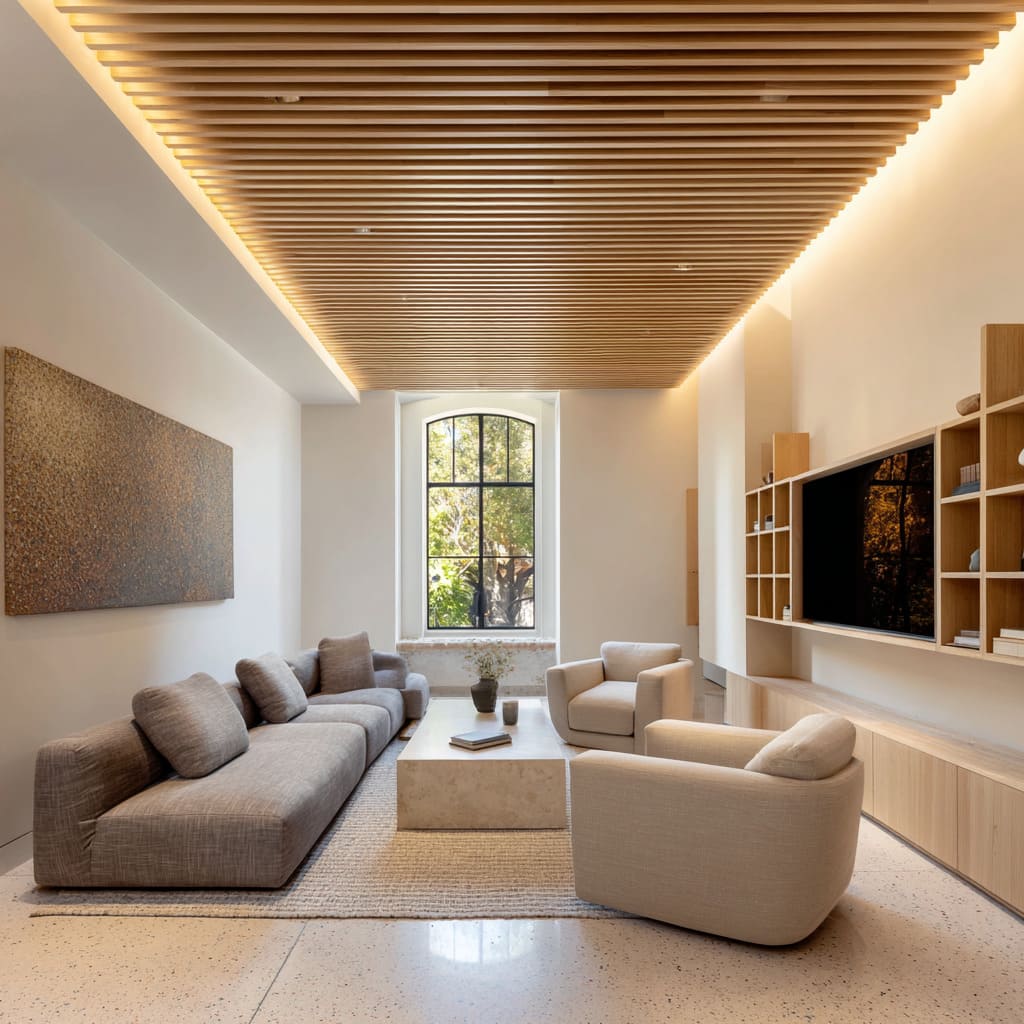
Highly visible furniture frames may suit a softer matte surface, while a subtly textured coating can give larger architectural components more depth. For casual rooms, comfortable setup inspiration can help show how coated metal sits beside upholstered pieces, timber, and soft lighting.
Match Sheen to the Surrounding Materials
If cabinetry, stone, and walls are already matte, an extremely glossy metal element may attract more attention than intended. Related sheen levels tend to create a calmer composition.
Repeat the Finish in Controlled Amounts
A powder coated color becomes more convincing when it appears more than once, but repetition doesn’t have to be exact or excessive. A railing could relate to light fittings, a table base, or small handles elsewhere in the room.
Two or three references usually establish a visual connection. Covering every metal object in the same custom color can make the design feel overly coordinated.
Common Mistakes to Avoid
Choosing color from a screen alone is risky because physical coatings react to daylight, artificial lighting, neighboring materials, and surface texture. A sample viewed beside the actual flooring, wall paint, and cabinetry gives a better idea of the finished result.
Another mistake is assuming every powder coated component is maintenance-free. Edges, joints, outdoor-adjacent areas, and frequently struck surfaces still deserve appropriate fabrication and care. The coating is durable, but the design and installation also matter.
Frequently Asked Questions
Is powder coated metal only suitable for modern interiors?
No. The finish can work in transitional, industrial, minimalist, and even traditional rooms when the shape and color are appropriate. Simple matte finishes often blend more easily than highly decorative or glossy options.
Can powder coated metal be used for furniture?
Yes. Metal table legs, shelving frames, benches, chairs, consoles, and side tables are common possibilities. Furniture benefits from the ability to coordinate the metal finish with a room’s wider color scheme.
Should powder coated metal match the wall color?
It can, but exact matching isn’t necessary. A slightly darker or lighter related tone may create more depth while still feeling connected to the surrounding palette.
Specify the Finish With Purpose
Powder coating is most useful when color, durability, and structure are considered together. Choose the metal component because it performs a real job, then select a finish that strengthens the room rather than demanding attention on its own. Thoughtful samples and controlled repetition can turn ordinary metalwork into one of the most integrated details in the interior.
Related Posts